

Press release drafted by the Government
France 2030 “Development of critical innovative technologies”
Press release.
November 21, 2024,
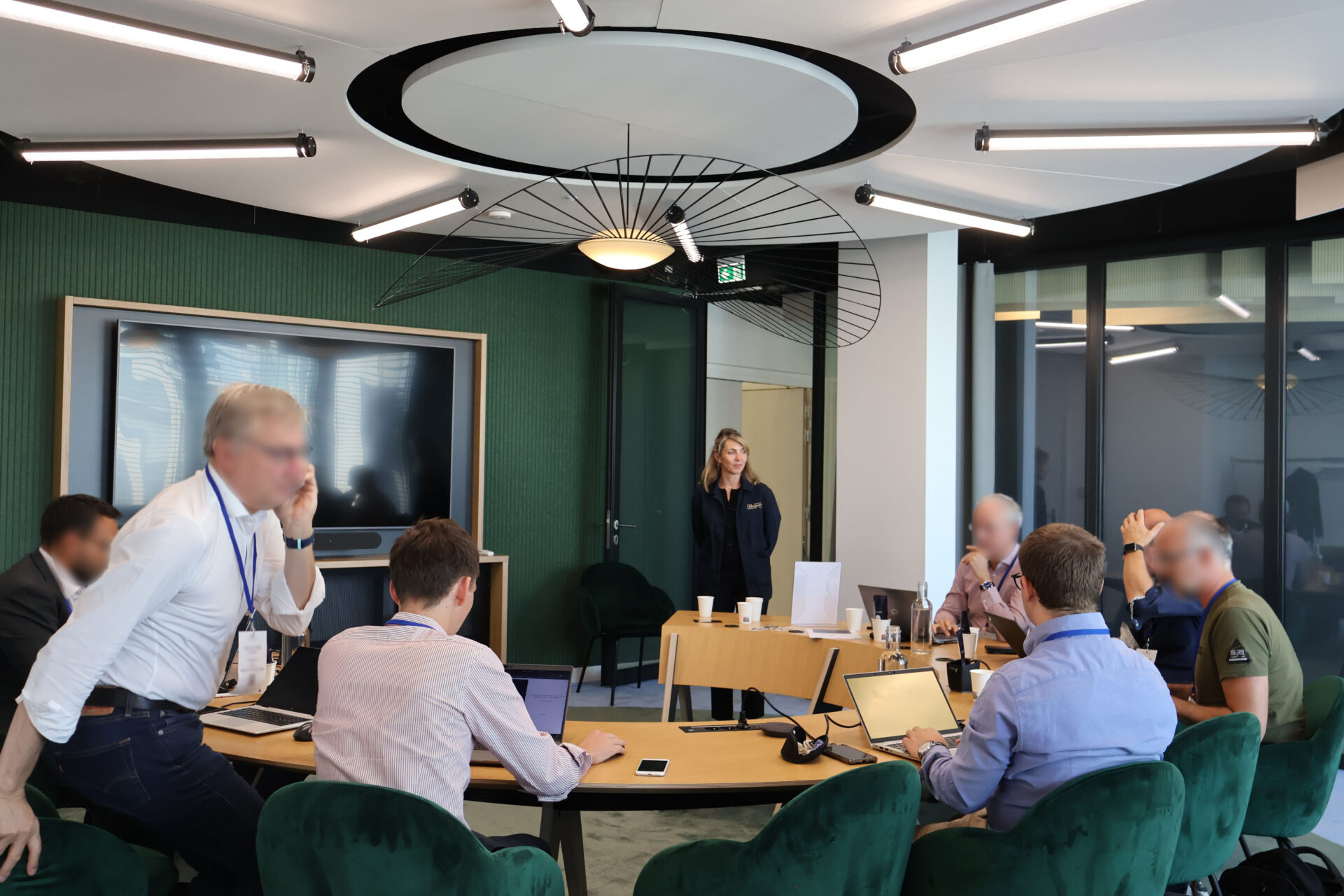
At the opening of the European Cyber Week in Rennes, Clara Chappaz, Secretary of State for Artificial Intelligence and Digital Affairs, announced the launch of the fourth edition of the France 2030 “Development of Critical Innovative Technologies” scheme, dedicated to securing data hosting and processing technologies, targeting in particular the cloud, quantum and artificial intelligence.

On this occasion, the Secretary of State also unveiled the 12 new winners of the third edition of this scheme, which focuses on cybersecurity assessment.
Digital innovation has continued to accelerate in recent years, with the emergence of new forms of quantum computing, the multiplication of cloud uses, and the impressive rise in artificial intelligence capabilities. All these innovations carry with them a fundamental challenge of trust, and more specifically of data control. In a global context where this control is constitutive of sovereignty, the call for “Development of critical innovative technologies 4” focuses precisely on this subject: the protection of stored, transmitted or calculated data. With this new theme, 25 million euros will be committed from 2025 to enrich the industrial offer in terms of cybersecurity.
Since 2021, the national cybersecurity strategy of France 2030 has aimed to bring out French champions in the sector, both to support the development of a sector with significant economic potential and to guarantee our country mastery of the technologies essential to its sovereignty. The support mechanisms put in place thanks to France 2030 make it possible to structure the French ecosystem around these key issues.
In this context, the third edition of the “Development of Critical Innovative Technologies” call for projects, launched in July 2023, focused on cybersecurity assessment and the acceleration of innovation for products and services to effectively and quickly implement the new NIS 2 and DORA regulations. These European regulations will be transposed into national law through the “Resilience” bill, which will be examined by the Senate in early 2025.
At the same time, France 2030 allows the French cybersecurity offer to strengthen its mastery of the technologies essential to the sovereign management of the regulatory compliance process, which also represents a major potential market for French players. The 12 winners of the third edition of the call for projects will thus be supported to position themselves at the forefront of the field of cybersecurity assessment, over the long term, and to support the development of international standards.
Antoine Armand, Minister of the Economy, Finance and Industry, said : “With this new call for projects and the announcement of the 12 new winners of the “development of critical innovative technologies” call, we are confirming the ambition to engage with the players in this strategic sector and we are concretely strengthening our action in the service of the country’s long-term industrial sovereignty.”
For Clara Chappaz, Secretary of State for Artificial Intelligence and Digital Affairs : “The adoption of AI cannot be achieved without users’ trust in this technology and this trust requires security. This new call for projects will be decisive in facilitating and accelerating AI use cases, which are currently limited by security or data protection constraints. »
“The 12 winners selected in the previous edition of the scheme will be innovative players on whom the future entities regulated by NIS 2 and DORA will be able to rely. This is in order to have high-performance sovereign solutions that allow them to assess their level of cybersecurity and progress in their compliance. »
The 12 new winners selected as part of the 3rdedition of the “Development of Critical Innovative Technologies” call
| Projects | Organizations | Purpose and description of the projects |
| EVA2026 | BOARD OF CYBER SAS and IMT -TELECOM SUDPARIS | Study and implementation of automation of Cyber rating processes, for cyber insurance and supply chain security chain). |
| WAATCH | NAMESHIELD | EASM’s discovery and monitoring platform, which integrates cognitive assistance to map the company’s cyber assets. Aims to provide indices for measuring the technical and organizational systems evaluated for analysis and rating. |
| VOLTIX | VIACCESS ORCA and WALLIX | VOLTIX’s ambition is to design and develop a strategic solution to centralize and secure the management of secrets in the software supply chain of telecom operators and industry Integration of Artificial Intelligence into an existing solution for automated cybersecurity assessment of mobile and embedded applications without access to the source code. |
| DXC AIIR | REVERSENSE | Integration of Artificial Intelligence into an existing assessment solution Automated cybersecurity of mobile and embedded applications without access to source code. |
| CYBRH | ERIUM and ANOZRWAY | The CYBR-H project aims to be the European reference solution for measuring human risk in Cyber, mobilizing people on their cyber defense, piloting and deploying individualized training actions for companies. |
| CCPM | TENACY SAS, EARLY MAKERS GROUP SA and FIVE9S SAS | The CCPM project aims to offer a technological solution to automatically and continuously assess the cybersecurity posture for organizations, identify optimization levers and propose the automatic construction of action plans. |
| CYFI3 | CITALID CYBERSECURITY and EUROPLACE INSTITUTE OF FINANCE | The “Cyfi” consortium is united around an ambitious R&D program to provide the entire market (policyholders, brokers, (re)insurers, etc.) with a trusted technological third party for the quantification and management of cyber risks. |
| PENSTEST LLM | ADACIS, UNIVERSITY OF BORDEAUX, KNOCK KNOCK | The Pentest.LLM project aims to explore and apply the potentials of Large Language Models to increase the capabilities of pentesters, in particular regarding the generation of programming codes and scripts to exploit vulnerabilities. |
| ALCY | ALCYCONIE | The objective of the project is to integrate Artificial Intelligence into training and crisis management tools, and to work on the management of cognitive biases in a transversal way. |
| POGG | GITGUARDIAN and FRENCH ALTERNATIVE ENERGIES AND ATOMIC ENERGY COMMISSION | The project consists of becoming an essential component in the security of development processes, whether for public or private code. The goal is to become the essential platform for code security. |
| AUDITLLM | OPINIONSCIENCE and WIKIMEDIA FRANCE – Association for the Free Sharing of Knowledge | In partnership with Wikimedia and with the support of Campus Cyber, the project will develop a first new range of LLMs for auditing corpora and models. This offer is part of a complete operational diagnosis of AI security. |
| HSNG | SERMA SAFETY AND SECURITY | Hardsploit®NG, aims to develop a security audit tool for electronic systems, to facilitate testing and communication with electronic devices via AI for rapid identification of components and protocols. |
The call for projects “Development of critical innovative technologies4th edition” is operated on behalf of the State by Bpifrance. Applications are open from 19 November 2024 with the following successions:
- January 30, 2025 at 12 p.m. (noon);
- April 23, 2025 at 12 p.m. (noon)
The specifications are available on the Bpifrance website: Call for projects “Development of critical innovative technologies4th edition” | Bpifrance
About France 2030
- Reflects a twofold ambition : to sustainably transform key sectors of our economy (health, energy, automotive, aeronautics and space) through technological innovation, and to position France not only as a player, but as a leader in the world of tomorrow. From fundamental research, to the emergence of an idea to the production of a new product or service, France 2030 supports the entire life cycle of innovation until its industrialization.
- Is unprecedented in its scale : €54 billion will be invested to ensure that our companies, universities and research organisations are fully successful in their transitions in these strategic sectors. The challenge: to enable them to respond competitively to the ecological and attractiveness challenges of the world of the future, and to bring out the future leaders of our sectors of excellence. France 2030 is defined by two cross-cutting objectives consisting of devoting 50% of its expenditure to the decarbonisation of the economy, and 50% to emerging players who drive innovation, without spending that is unfavourable to the environment (in the sense of the Do No Significant Harm principle).
- Is implemented collectively : designed and deployed in consultation with economic, academic, local and European actors to determine the strategic orientations and flagship actions. Project leaders are invited to submit their application via open, demanding and selective procedures to benefit from the support of the State.
- Is managed by the General Secretariat for Investment on behalf of the Prime Minister and implemented by the Agency for Ecological Transition (ADEME), the National Research Agency (ANR), Bpifrance and the Banque des Territoires.
About Bpifrance
Bpifrance finances companies – at each stage of their development – in credit, guarantees and equity. Bpifrance supports them in their innovation and international projects. Bpifrance also ensures their export activity through a wide range of products. Consulting, university, networking and an acceleration program for start-ups, SMEs and mid-caps are also part of the offer offered to entrepreneurs.
Thanks to Bpifrance and its 50 regional offices, entrepreneurs benefit from a close, unique and efficient contact person to help them face their challenges.

Read the article

Resilience in the era of AI: the delicate art of balance - Maddyness
4 December 2025Read the article

When cognitive psychology sheds light on cyber crisis management
6 November 2025Read the article