In 2025, M-CERT recorded 936 cyber incidents in the maritime sector worldwide, compared to 604 in 2024. A significant increase that highlights the sector’s growing exposure to cyber threats and the need to strengthen its operational resilience.
In response to these challenges, France Cyber Maritime publishes its new overview of the maritime cyber threat, to which Alcyconie is proud to have contributed alongside Atos, BZHunt, DIATEAM, the FMES Institute, GLIMPS, Marlink, Orange Cyberdefense, LESTR, and XRATOR.
As part of this contribution, we review the operational resilience challenges of the maritime sector in the face of increasingly complex hybrid risks, and the levers that allow organizations to better prepare for them.
FROM CYBER PROTECTION TO OPERATIONAL RESILIENCE
A cyber incident affecting a port community system, terminal operating system, or critical maritime service can now disrupt freight flows in multiple countries within hours. As maritime operations become increasingly interconnected, cybersecurity risk has shifted from a purely technical concern to a strategic operational challenge for ports, shipping companies, maritime authorities, and logistics stakeholders.
Building on experience gained from large-scale cyber crisis exercises conducted with maritime and port organizations across Europe, Alcyconie has observed a profound shift in the sector’s approach to cyber risk. While organizations initially focused on strengthening technical protection and detection capabilities, the most experienced actors now recognize that resilience depends just as much on their ability to maintain operations, coordinate stakeholders, and make critical decisions under pressure.
The maritime sector faces particular challenges. Unlike many sectors, it operates within a highly interconnected ecosystem where any disruption affecting a single organization can quickly spread to shipping companies, terminal operators, logistics providers, pilots, customs authorities, and public institutions. At the same time, maritime infrastructure is at the heart of global trade and strategic competition. In several recent geopolitical crises, ports, shipping routes, and logistics ecosystems have become direct or indirect targets of disruptive actions aimed at exerting economic, political, or strategic pressure. As a result, cyber-resilience is no longer solely an organizational issue. It increasingly relies on the collective capacity of maritime communities to anticipate, resist, and respond effectively to crises that may combine cyberattacks, operational disruptions, supply chain impacts, and geopolitical dynamics.
STRENGTHENING GOVERNANCE AND ORGANIZATION IN TIMES OF CRISIS
The implementation of the NIS2 directive, combined with growing concerns about business continuity, accelerates the evolution of cyber crisis governance across the maritime sector. Within the organizations supported by Alcyconie, several common priorities emerge:
- Establish clear alert, escalation, and decision-making processes that go beyond technical teams;
- , subcontractors, and operational partners into crisis management systems;
- Strengthen business continuity and recovery plans for essential maritime services and logistics operations;
- Improve coordination between senior management, operational teams, and cybersecurity specialists.
These developments reflect a broader awareness that cyber incidents can no longer be seen solely as IT events. In the maritime sector, disruptions can affect ship operations, cargo management, supply chains, communications, or utilities, requiring coordinated responses involving multiple functions and organizations. As a result, cyber crisis simulation exercises have become a central element of resilience programs, enabling organizations to validate their governance structures and identify potential weaknesses before a real incident occurs.
PREPARING FOR TOMORROW’S CRISES
While ransomware, denial-of-service attacks, and system compromises remain major concerns, maritime organizations increasingly recognize that future crises are likely to combine cyber, operational, informational, and geopolitical dimensions. The nature of the exercises has therefore evolved considerably.
For organizations embarking on their journey toward resilience, the exercises mainly aim to validate crisis management frameworks, clarify responsibilities, and improve coordination among technical, operational, and leadership stakeholders.
For more mature organizations, the objectives are broader. Exercises increasingly involve operational technology environments, operational units, steering committees, and external partners. The focus is no longer on technical response, but on strategic decision-making, operational continuity, and stakeholder coordination under uncertain conditions. This evolution reflects the changing threat landscape.
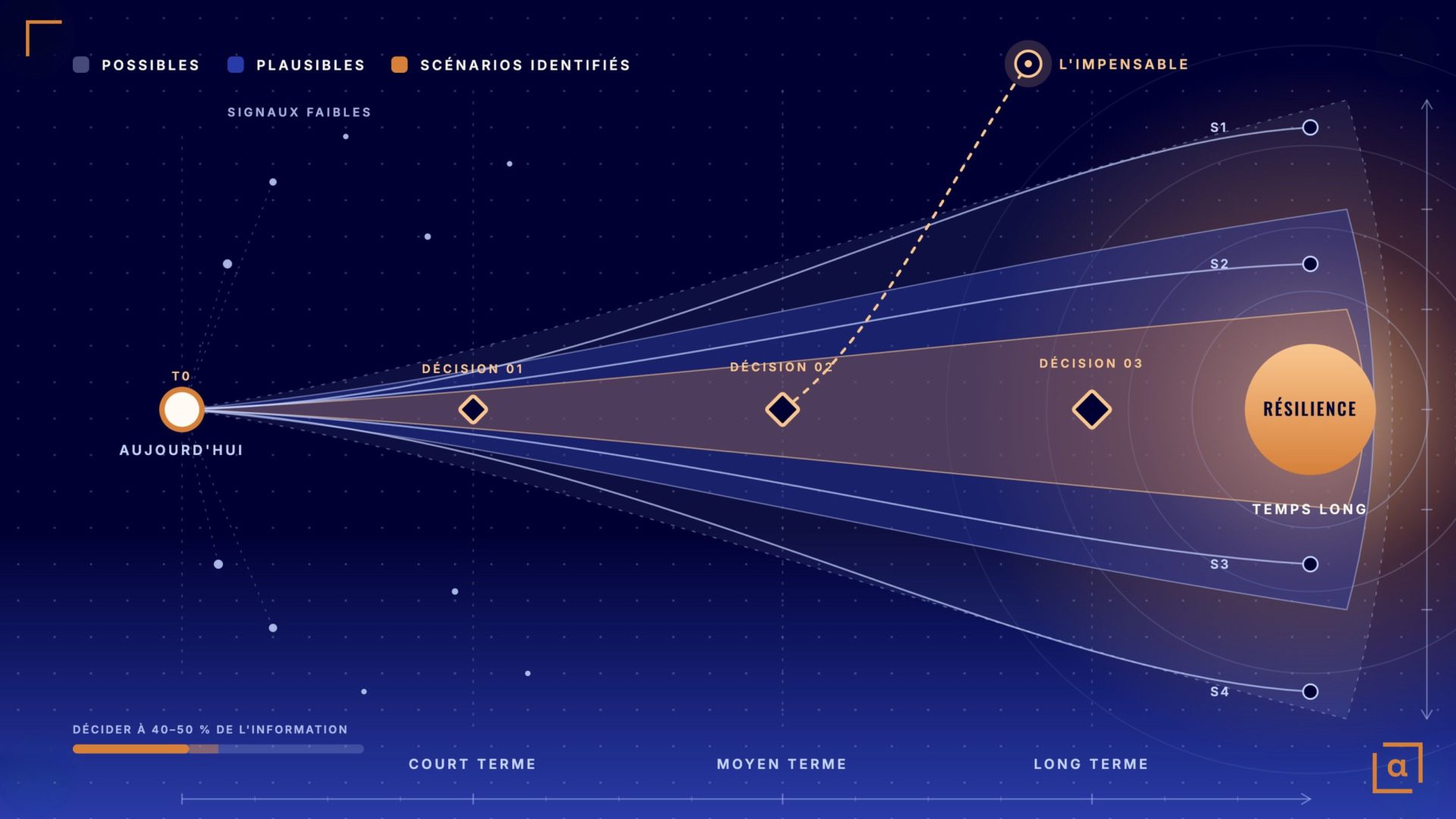
For a sector at the forefront of global trade and geopolitical tensions, strategic foresight is no longer an option. Maritime organizations must constantly look beyond current threats and develop their ability to anticipate new forms of disruption. Whether related to technological innovation, geopolitical instability, supply chain dependencies, or hybrid influence operations, future crises will likely not resemble those of the past. Strengthening resilience therefore requires not only being ready but also cultivating a culture of continuous anticipation and adaptation.
In this context, cyber crisis simulation exercises are increasingly used as a strategic foresight tool. Beyond validating existing procedures, they allow organizations to explore plausible future scenarios, challenge their assumptions, and prepare decision-makers for crises that have not yet occurred but could have a significant impact on maritime operations and business continuity.
Growing geopolitical tensions, interdependencies within supply chains, dependence on essential third parties, and the emergence of hybrid threats are creating scenarios whose consequences extend far beyond information systems. Maritime organizations are increasingly exposed to situations where multiple disruptions occur simultaneously: compromise of a strategic supplier, prolonged unavailability of operational systems, disruption of supply chains, disinformation campaigns targeting port activities, or coordinated actions aimed at undermining trust and operational performance.
year, Alcyconie has notably developed advanced crisis simulations for major international players in the maritime sector, including scenarios combining cyberattacks, operational disruptions, and influence operations. These exercises are not intended to predict the next crisis, but to confront organizations with plausible situations that challenge their existing assumptions and test their ability to adapt under pressure.
LESSONS LEARNED FROM MARITIME CRISIS EXERCISES
Several recurring observations emerge from exercises conducted with maritime and port organizations:
- Operational impacts are often underestimated compared to technical impacts;
- and service providers frequently constitutes a critical vulnerability;
- Decision-making at the management level plays a decisive role in limiting the consequences of an incident;
- Communication with customers, partners, authorities, and the media is rapidly becoming a strategic issue;
- Coordination within the maritime ecosystem often proves more difficult than implementing the technical corrective measures themselves.
These findings illustrate a broader transformation in cyber threat preparedness. Organizations are no longer just seeking to improve their ability to detect and respond to cyberattacks. They are increasingly striving to strengthen their ability to maintain operational control, preserve essential services, and make informed decisions despite uncertainty and lack of information.
FUTURE PROSPECTS
The maritime sector is at the crossroads of global trade, strategic infrastructure, and geopolitical competition. As cyber threats continue to evolve, resilience can no longer be measured solely by the strength of technical defenses.
The organizations that prove most resilient will be those capable of maintaining operational continuity, effectively coordinating their actions within complex ecosystems, and making critical decisions under pressure.
In a context where cybersecurity, operational, informational, and geopolitical risks are increasingly converging, resilience has become a collective capability. For maritime sector actors, preparing for this reality through realistic and ambitious crisis exercises is no longer an option: it is a strategic necessity.
Read the article

Cyber crisis exercise for a COMEX or a CODIR: which decisions to test?
17 November 2026Read the article

Six months after Mythos: behind the predicted "vulnapocalypse," the reality of "vuln fatigue"
28 October 2026Read the article